Training@RSS
31 Jul 2025 17:55:16
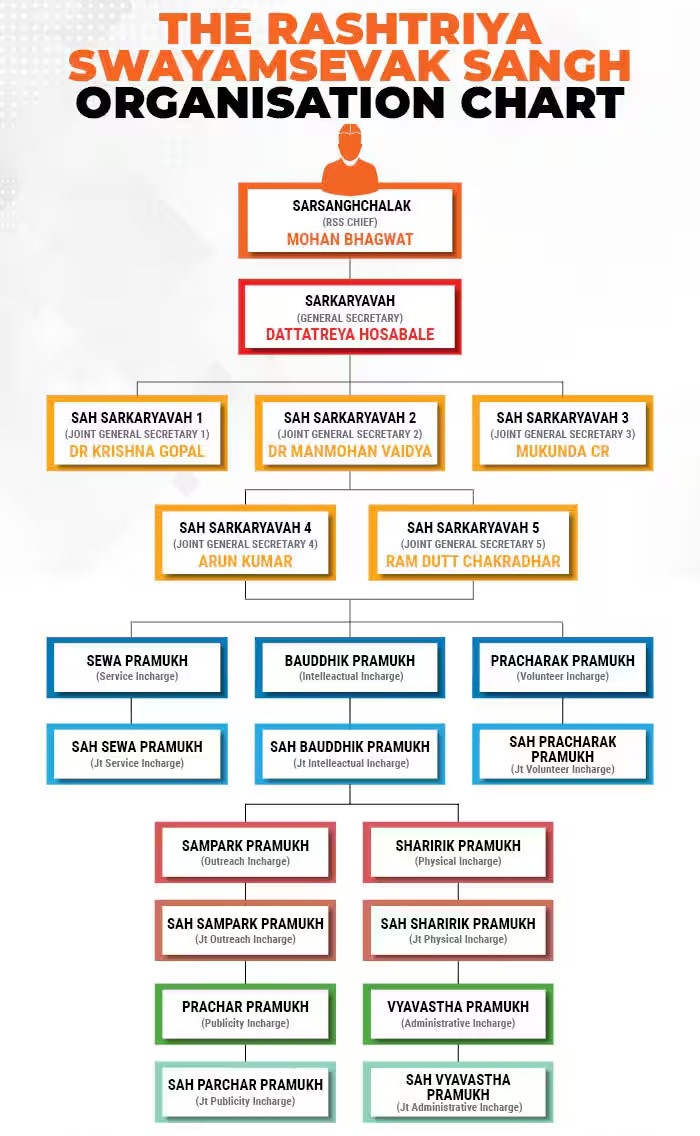
Order in Service: Structure of RSS
The scorching heat of May in Nagpur does not deter the hundreds of youth who wake up at 4 AM and train relentlessly until lights-out at 10 PM. Their routine is a disciplined mix of physical exercises, yoga, group discussions, and lectures—an intense regimen designed to prepare them for a greater purpose. These young men, who come from every corner of India, undergo this rigorous training not for personal gain, but to become the torchbearers of an organization dedicated to national service and unity.
This is the Rashtriya Swayamsevak Sangh’s (RSS) Third Year Sangh Shiksha Varg (SSV), now called as Karyakarta Vikas Varg (Second / Dvitiya) (KVS 2) — the highest level of training for its dedicated Swayamsevaks. Nagpur, the birthplace of the RSS, hosts this specific camp where only those who have completed two years of training are allowed to participate. The purpose? To shape disciplined, committed, and service-oriented leaders who will drive the Sangh’s vision forward.
A Structured Training for National Service
Since its inception, the RSS has functioned through a well-defined structure, ensuring systematic growth and discipline among its members. At the grassroots level, every Swayamsevak begins their journey at the local shakha (Primary unit), attending daily gatherings that focus on physical training, ideological discussions, and leadership development. As they progress, they become eligible for higher training camps:
1. Prarambhik Varg – The Entry Point:
A 3-day camp - Intro to RSS - Basic info about Bharat - Sensitization for social activity - Camp life
2. Prathmik Shiksha Varg (PSV)
A week-long introductory training program
Becoming a Swayamsevak - Familiarizing to RSS history & working methodology - Skilling swayamsevak to conduct shakha
3.Sangh Shiksha Varg
Upgrading the functional skills to conduct shakha - Strengthening philosophical foundation - preparing the swayamsevak to live and lead the Sangh way - Developing the spirit of teamworking - Maximizing your work sphere from organization to society .
4. Karyakarta Vikas Varg 1 (First / Pratham)
Enhancing swayamsevak’s capacity to coordinate multiple shakhas simultaneously - Capacity-building to run different works of social transformation - Developing an understanding of how RSS views different issues
5. Karyakarta Vikas Varg 2 (Second / Dvitiya) – The Final Test:
Taking the swayamsevaks back to the birthplace of RSS in Nagpur, this program is designed for those who will take on leadership roles, guiding and expanding the organization’s work across India.
To work with a national perspective - Understanding what we have to give to the world as Hindus (Vasudhaiva Kutumbakam) - Experiencing the true spirit Bharat
The KVV (Second), in particular, fosters national unity by bringing together participants from diverse backgrounds. This year alone, trainees spoke 16 different languages but stayed, trained, and learned together as one unit—an experience that embodies the Sangh’s belief in “unity in diversity.”
The RSS Mission: Strengthening India Through Discipline and Service
The structured hierarchy of RSS, reinforced through rigorous training, has enabled it to expand its reach across India. Today, with over 1.5 lakh service projects, RSS swayamsevaks are actively involved in tribal upliftment, education, disaster relief, and rural development.
For the youth of India, the RSS offers not just an organization, but a disciplined way of life—one that builds character, leadership, and a sense of responsibility towards society. As the Sangh continues its mission of national reconstruction, it is the trained Swayamsevaks who will carry forward its vision, ensuring that India stands strong, united, and self-reliant.
Need to create something of this sort that is up-to-date