Dr Keshav Baliram Hedgewar - Founding Sarsanghchalak
Total Views |


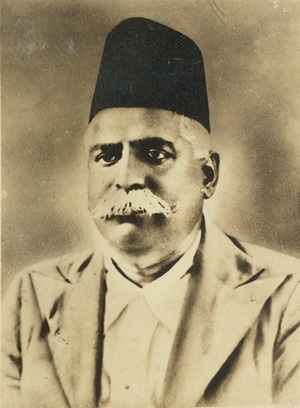
Dr Keshav Baliram Hedgewar was born in Nagpur on April 1, 1889 on the auspicious day of Gudi Padwa. He was the youngest child in the family. His elder brothers were Mahadevshastri and Sitaramshastri. Hedgewar family hails from Telangana but was settled in Nagpur. Hedgewar was a poor family but never compromised with self-esteem even though it faced some hardships.
Dr Hedgewar was a born patriot, which was experienced even in his school days. In 1897, the then British government decided to celebrate 60th anniversary of the coronation ceremony of Queen Elizabeth. School building was illuminated and decorated. Speeches were made in honour of Queen Elizabeth. Sweets were distributed among the students. But Keshav threw sweets in a nullah as he was dead against any kind of celebration of foreign rule. He did not eat the sweets as was against British rule and wanted to have freedom. The incident took place when Keshav was only eight years old. Similar incident occurred when Keshav was 12-years-old. In 1901, the coronation of King Edward (VII) took place after the demise of Queen Elizabeth. Consequently, King Edward also became ruler of India. Few organizations decided to celebrate this occasion.
Nagpur based Empress Mill again illuminated and decorated its factory. It decided to burst crackers, which was seen as a big event by the locals. Keshav refused to go to this event even after insistence by his friends. He categorically told his friends that it was shameful to celebrate the coronation of a foreign ruler.
After completing primary education, Keshav was enrolled in Nilcity High School. But Keshav was rusticated from the school in 1908 for raising the slogan of Vande Mataram, which was banned by British rule. Vande Mataram had emerged as a big motivational slogan that time because of nationwide anger and agitation against the British government’s decision to divide Bengal. In 1908, students decided to welcome the school inspector by raising the slogan of Vande Mataram. All the students were rusticated from the school, creating anger among the parents. A compromise formula was worked out under which an individual student was expected to admit his mistake before the teacher. Keshav, however, refused to accept the `so-called’ mistake and was rusticated.
Keshav was to attend the matriculation examination that year but the incident created a serious problem for his matriculation examination. Keshav joined a national school in Yavatmal, which was formed by Bapuji Ane and Babasaheb Paranjape. Unfortunately, the school was closed by the British government, creating fresh problems for Keshav.
He went to Pune to explore another opportunity. During the same period, a few people from Kolkata had formed a national university. The examination of this university was to be held in the month of July at Amravati. Keshav appeared for this examination and passed matriculation in 1909 when he was 20-year-old.
Kolkata was a hub of political activities, particularly of revolutionary methods, at that time. Keshav was closely associated with revolutionaries through Anushilan Samiti. Keshav chose to take admission at National Medical College, Kolkata with the sole purpose in mind to continue his revolutionary activities. Significantly, Keshav never started medical practice even though he could have. Dr Hedgewar returned to Nagpur from Kolkata in 1916. However, he neither got married nor got involved in family life. His only aim was to work for nation and freedom.
During the same period, the first world war had broken out and revolutionaries were planning to launch armed struggle against British rule, to take advantage of the situation in Europe.
However, the plan did not work out for some reasons. In fact, England emerged as a stronger country after the first world war.
Dr Hedgewar was deeply influenced by Lokmanya Tilak. However, Lokmanya Tilak was in jail from 1908 to 1914. After release in 1914, Lokmanya Tilak restarted his fight for freedom by announcing `Punshcha Hari Om’. Dr Hedgewar became active again in Congress, which was the only political front that time. Dr Hedgewar was head of the team, which was asked to look at arrangements for the Congress convention, which was held in Nagpur in December 1920. Lokmanya Tilak died in the same period (August 1, 1920) and Mahatma Gandhi led the Congress. Dr Hedgewar continued to work for Congress as Mahatma Gandhi was insisting on Swadeshi and non-cooperation with British rule. Dr Hedgewar started visiting villages and town to awaken the people about freedom, inviting the wrath of the British government. Dr Hedgewar was jailed for sedition for a period of one year. He was released from the jail in July 1922.
Dr Hedgewar, however, was not satisfied with Mahatma Gandhi’s approach towards Muslims. Mahatma Gandhi was insisting for Hindu-Muslim unity for political freedom. Dr Hedgewar met Mahatma Gandhi and asked why he was insisting only Hindu-Muslim unity when people of religions were also staying in India. Mahatma Gandhi tried to satisfy Dr Hedgewar by saying that he was trying to make Muslims patriotic by insisting on Hindu-Muslim unity. Dr Hedgewar was not satisfied with the reply of Mahatma Gandhi. But Dr Hedgewar continued to work with Congress.
However, Dr Hedgewar was haunted by some other thoughts as well. While revolutionary work has its limitations, the same was the case with the Congress method. Dr Hedgewar seriously felt that awakening and organizing the people was the only way to achieve freedom. Dr Hedgewar was used to get disturbed by another thought. He felt a handful of British people, who came with the purpose of trade, managed to rule this nation.
He felt that it could happen only because of help by our own people.
Dr Hedgewar strongly felt the need for a strong organization of highly motivated activists, who would keep the nation awakened and alert all the time. This led to the formation of RSS. Dr Hedgewar was 36-year-old when RSS was launched. Dr Hedgewar was ridiculed that time because of his method but it did not deviate him from his determination.
RSS was mainly formed to organize Hindus and make this nation strong. Hindus were divided and weak because of various reasons, which made this nation weak. For Dr Hedgewar, organizing Hindus was not merely bringing them together but making such volunteers, who were prepared to go any extent and sacrifice their lives for the nation. Dr Hedgewar explored various methods to inculcate equality and discipline. For example, Swayamsewaks used to stand in one line after getting orders – `Ekshah Sampat’. Swayamsevaks stand in one line, brushing aside all the divisive elements. Such experiments were novel, which made Swayamsewaks confident and determined. Such experiments ensured strengthening of brotherhood. Dr Hedgewar ensured that no kind of discrimination was observed in RSS. He decided to organize all the programmes collectively. Initially, Doctor Hedgewar used to appeal to people to spare only one hour for RSS but many of them became staunch workers of RSS, devoting their lives.
Dr Hedgewar specifically chose the word `Swayamsewak’, which necessarily denotes volunteer.
Dr Hedgewar never forced anybody to join RSS but insisted to motivate and inspire people by his acts. He firmly believed that self-motivation was the only sustainable solution to awaken and educate the Hindus. Dr Hedgewar brought different meanings to `Swayamsewak’, who used to get ridiculed earlier. It was because Dr Hedgewar Swayamsewak was seen as a patriotic citizen.
Dr Hedgewar was a different kind of visionary, who always gave priority to organization instead of person. Dr. Hedgewar’s commitment to his ideals was evident in his insistence that RSS volunteers regard the saffron flag as their Guru. When some activists wished to honour him on Guru Purnima, he firmly rejected personal glorification, emphasising that the saffron flag symbolised eternal Hindutva. Dr Hedgewar was strongly against personal glorification.
His leadership placed the organisation above individuals, fostering a culture of humility and collective purpose. This is the reason behind the saffron flag as ‘Guru’ in RSS.
The most distinguished line between Dr Hedgewar and other leaders/philosophers is that Dr Hedgewar finalized his destination, his path, which will take the nation to the destination and the making of people, who will walk the path and take the nation to the destination.
Dr. Hedgewar’s organisational philosophy centred on Karyakarta Nirman (cadre development) through Vyakti Nirman (individual development). Today, RSS-inspired workers contribute to various spheres of national life, thanks to the values instilled by him. The RSS believes in progressive unfoldment, which is an indicator of its flexibility.
It has adapted to changing circumstances, embracing a dynamic and progressive Hindutva. Its ability to evolve while staying true to its core principles is a direct result of the strong foundation laid by Dr. Hedgewar. His vision and methodology continue to shape the RSS, making it not just an organisation, but a movement that grows stronger with each passing generation.
Dr Hedgewar's samadhi is situated on the premises of Reshim Bag in Nagpur, which continues to inspire all for Hindu organization and nation building.